

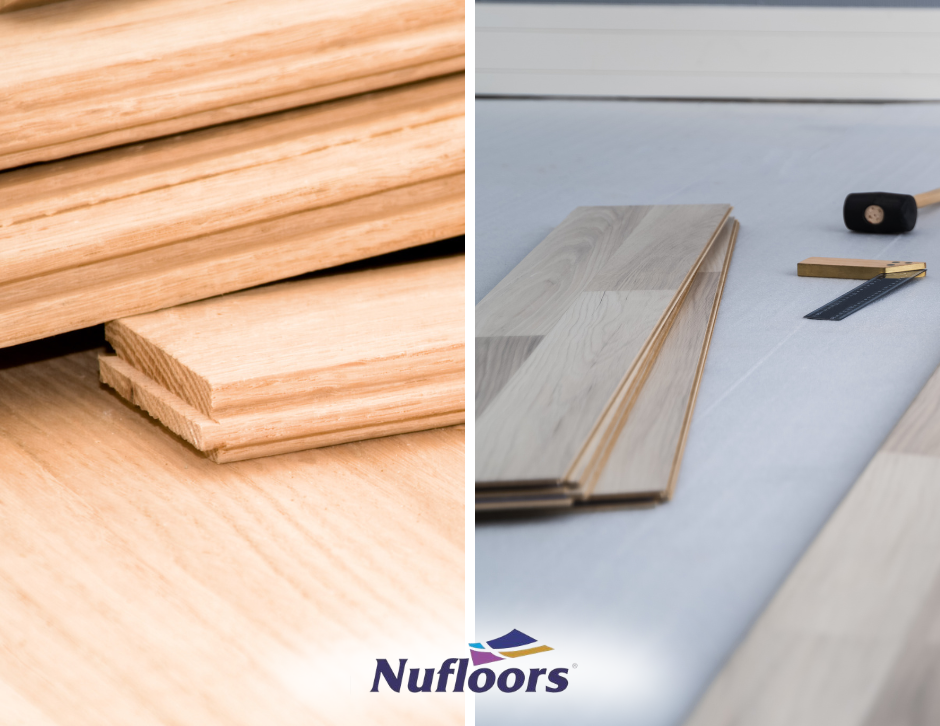
Solid and engineered hardwood can look remarkably similar once installed. Both can offer a genuine oak, maple or walnut surface, complete with the grain and variation that make wood flooring appealing.
The difference is beneath that surface. Construction affects where the flooring can be installed, how it responds to its surroundings and its potential for future refinishing. When comparing solid hardwood vs. engineered hardwood, those practical differences are more useful than appearance alone.
Construction and Response to Humidity
A solid hardwood board is milled from a single piece of wood. Engineered hardwood has a genuine hardwood surface bonded to supporting layers. In many constructions, those layers run in alternating directions, helping reduce expansion and contraction as conditions change.
Wood absorbs moisture from humid air and releases it when the air becomes drier. As it absorbs moisture, it expands. As it dries, it contracts.
In solid hardwood, that movement happens across a single piece of wood, mainly across the board’s width. During humid periods, boards can expand and the gaps between them may close. During dry periods, such as winter when indoor heating lowers humidity, boards can shrink and gaps may become more noticeable.
Engineered hardwood responds to moisture too, but its supporting layers help restrain that movement. In many products, the grain of adjacent layers runs in different directions, reducing how much the whole board expands or contracts. This generally means less seasonal movement than solid hardwood.
That stability does not make engineered hardwood waterproof. Excess moisture can still cause swelling, distortion or damage to the bonded layers. Both types need indoor humidity kept within the manufacturer’s recommended range.
Refinishing Potential and Long-Term Care
Solid hardwood can often be sanded and refinished multiple times over its life. The amount of usable wood above the tongue, previous sanding and the floor’s condition determine what is possible.
With engineered hardwood, refinishing potential depends on the thickness of the genuine wood surface. Some products allow sanding, while others have a surface too thin for that process. Check the manufacturer’s guidance if future refinishing is a priority.
Both types benefit from regular removal of grit, furniture protectors and prompt attention to spills. Use the recommended cleaning products and maintain the specified indoor humidity.
At our flooring store in Vernon, we can help you compare solid and engineered hardwood for the rooms you are updating. Knowing your subfloor, installation conditions and plans for the home gives us a useful starting point for narrowing the choice.