

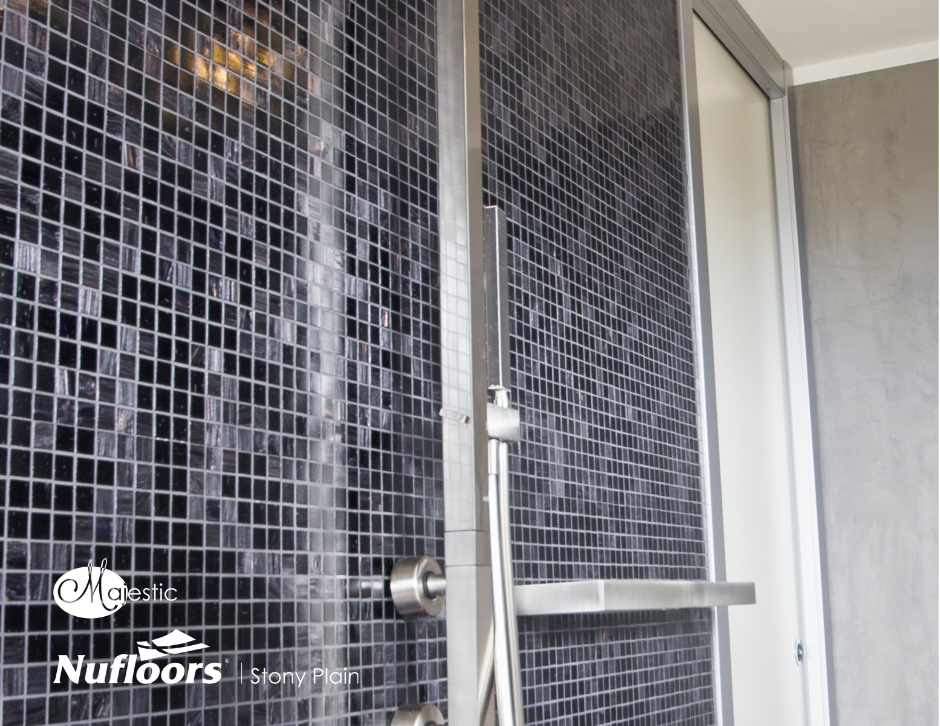
Few design materials can claim a history as long or as fascinating as mosaic tile. Thousands of years before modern flooring and wall coverings existed, skilled artisans were arranging tiny pieces of stone, glass and ceramic into elaborate works of art that decorated temples, villas and public spaces. Today, mosaic tile continues to bring texture, colour and craftsmanship into modern homes, proving that good design truly stands the test of time.
Whether used as a kitchen backsplash, shower niche or feature wall, mosaic tile offers homeowners an opportunity to incorporate one of the world's oldest artistic traditions into contemporary living.
The First Mosaics
The earliest mosaics appeared more than 4,000 years ago in Mesopotamia, where builders pressed small pieces of coloured stone, shells and clay into walls to create decorative patterns. These early designs were relatively simple, but they laid the foundation for an art form that would spread throughout the ancient world.
As civilizations became more advanced, so did their mosaics. Greek artisans began using carefully cut pebbles to create detailed geometric borders and natural scenes, while Roman craftsmen refined the technique even further. By cutting small cubes of marble, limestone and coloured stone, known as tesserae, they were able to create astonishingly detailed images depicting mythology, landscapes, wildlife and everyday life.
Many Roman mosaics remain remarkably intact today, offering a glimpse into homes and public buildings that were constructed nearly 2,000 years ago.
The Golden Age of Mosaic Art
Perhaps no civilization embraced mosaics more enthusiastically than the Byzantine Empire.
Beginning in the fourth century, artists transformed churches and cathedrals throughout Europe and the Middle East with shimmering glass mosaics that reflected candlelight across vast interiors. Tiny pieces of coloured glass, often backed with gold leaf, were carefully arranged to create religious scenes that seemed almost luminous.
Unlike Roman mosaics, which often focused on floors, Byzantine mosaics climbed walls, domes and ceilings, becoming an integral part of the architecture itself. Many of the world's most famous examples, including those found in Ravenna, Italy and Istanbul's Hagia Sophia, continue to inspire artists and designers centuries later.
The influence of these intricate designs can still be seen in many decorative tile collections available today.
A Material That Adapts to Every Style
Although mosaic tile has ancient origins, it remains remarkably versatile.
Modern manufacturing has expanded the range of materials far beyond natural stone. Today's homeowners can choose ceramic, porcelain, marble, glass and even metal mosaics, each creating a different visual effect while retaining the detailed appearance that defines the format.
Because the individual pieces are mounted on mesh sheets, mosaics are much easier to install than the hand-laid works created by ancient artisans. This allows designers to introduce intricate patterns without the enormous labour once required to produce them.
The wide variety of colours, textures and finishes also means mosaic tile can suit almost any design style, from traditional and transitional homes to sleek contemporary interiors.
Why Mosaic Tile Works So Well
One of the greatest strengths of mosaic tile is its flexibility.
Unlike large-format tile, mosaics can easily wrap around curved surfaces, shower benches, recessed niches and other architectural details that would be difficult to finish with larger pieces. This makes them especially popular in bathrooms, where they add texture and visual interest without overwhelming the space.
In kitchens, mosaic backsplashes introduce colour and pattern while protecting walls from moisture and cooking splashes. Many homeowners also use mosaics to frame fireplaces, accent feature walls or create decorative borders that complement larger floor or wall tiles.
Because each individual piece catches light slightly differently, mosaic installations naturally create depth and movement that changes throughout the day.
Ancient Craftsmanship Meets Modern Living
The remarkable thing about mosaic tile is not simply its beauty, but its longevity. An art form that began thousands of years ago continues to evolve while remaining instantly recognizable. The materials may have changed, and installation has become more efficient, but the appeal of carefully arranged small pieces creating something much greater than the sum of their parts has never diminished.
At our flooring store in Stony Plain, we'll help you explore mosaic tile in ceramic, porcelain, glass and natural stone while finding the right colours, textures and scale for your renovation. Whether you're planning a statement backsplash, an elegant shower or a decorative feature wall, mosaic tile offers timeless craftsmanship that continues to inspire homes around the world.