

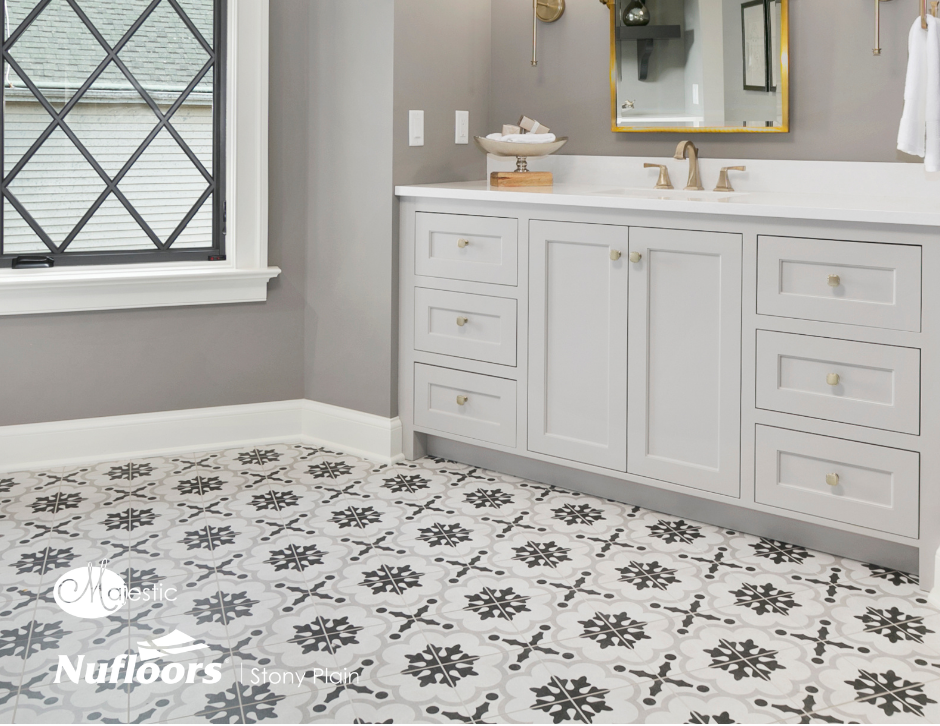
For hundreds of years, encaustic tile has transformed ordinary floors into works of art. Long before digital printing and mass production, skilled artisans created intricate patterns by embedding coloured clay into each tile, producing designs that would remain visible even after generations of foot traffic. Although today's homeowners often associate encaustic tile with kitchens, bathrooms and mudrooms, its history reaches back to medieval Europe, where it first became a symbol of craftsmanship and permanence.
Whether you're renovating a heritage home or adding character to a contemporary space, encaustic tile continues to offer a distinctive look that has endured for centuries. For design choices that match your taste, visit our flooring store in Stony Plain and we'll show you samples that fit your vision.
A Decorative Tradition Born in Medieval Europe
Encaustic tile first appeared during the 13th century, when churches, monasteries and castles throughout England and France began incorporating decorative floors into their architecture. Unlike painted or glazed tiles, encaustic tiles were created by pressing different colours of clay into moulds before firing them in a kiln. The pattern became part of the tile itself rather than sitting on its surface.
The process was labour-intensive, but the results were remarkably durable. Floors in places such as Westminster Abbey and Salisbury Cathedral still feature original encaustic tiles that have survived hundreds of years of daily use, demonstrating both the quality of the craftsmanship and the longevity of the material.
The patterns themselves often reflected the architecture of the period. Geometric borders, floral motifs, heraldic crests and religious symbols appeared throughout important public buildings, creating richly decorated interiors at a time when every tile was made by hand.
A Victorian Revival
Although encaustic tile fell out of favour for several centuries, it experienced a remarkable revival during the Victorian era.
Architects involved in the Gothic Revival movement admired medieval craftsmanship and began reintroducing encaustic tile into churches, railway stations, public buildings and grand private homes. Companies in England refined manufacturing techniques while preserving the traditional appearance of the tiles, making decorative floors more widely available than ever before.
Victorian entrance halls often featured bold geometric patterns, while conservatories, fireplaces and hallways showcased intricate borders that reflected the period's appreciation for craftsmanship and detail. Many of these floors remain in excellent condition today, a testament to the durability of the material and the timelessness of its design.
Modern Encaustic Tile Has Evolved
Today's homeowners can enjoy the beauty of encaustic tile without many of the maintenance requirements associated with traditional cement products.
Advances in ceramic and porcelain manufacturing have made it possible to reproduce historic encaustic patterns with remarkable accuracy. Modern encaustic-look tile captures the layered appearance, rich colours and handcrafted character of the originals while offering excellent resistance to scratches, stains and moisture.
Designs have evolved as well. While traditional black, cream, terracotta and deep blue patterns remain popular, many manufacturers now produce softer neutral palettes that work beautifully in contemporary homes. This allows encaustic tile to complement everything from modern farmhouse kitchens to minimalist bathrooms.
Why Designers Continue to Specify Encaustic Tile
Unlike many decorative finishes, encaustic tile doesn't rely on current trends. Its appeal comes from pattern, proportion and craftsmanship rather than fashionable colours or oversized graphics.
Because the designs naturally draw the eye, encaustic tile is often used to define a particular space rather than cover an entire room. A mudroom floor, powder room, kitchen backsplash or fireplace surround becomes an architectural feature without requiring elaborate cabinetry or decorative accessories.
It also pairs exceptionally well with simple materials. Painted shaker cabinets, natural wood, brass hardware and stone countertops allow encaustic patterns to become the focal point while maintaining a balanced, timeless design.
A Historic Material That Still Feels Fresh
The most enduring design materials are those that continue to evolve without losing their identity. Encaustic tile has done exactly that. From medieval cathedrals to Victorian homes and today's contemporary interiors, it has remained relevant because it celebrates craftsmanship rather than fashion.
At Nufloors Stony Plain, we help homeowners explore ceramic and porcelain tile inspired by historic encaustic designs while selecting colours and patterns that suit their home and lifestyle. Whether you're creating a dramatic entryway, refreshing a kitchen backsplash or renovating a bathroom, encaustic-inspired tile offers a timeless way to introduce personality, history and lasting style.