

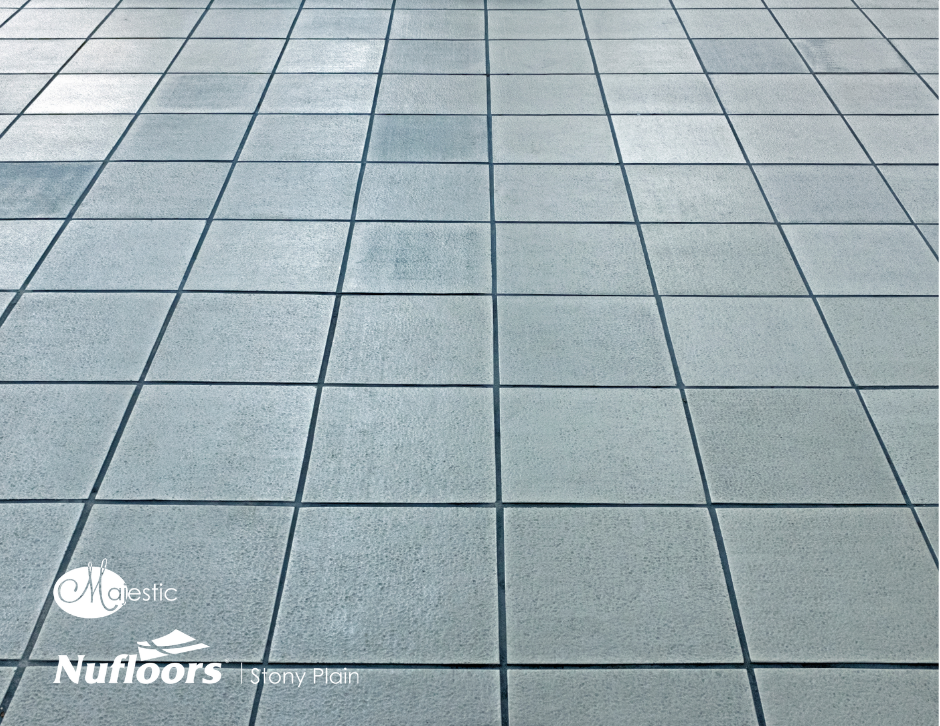
Slate has a substantial presence that suits spaces with strong architectural features. Beneath a timber bench or alongside a stone fireplace, its layered surface gives the room a sense of permanence. Individual pieces carry their own markings, making the finished floor more varied than a manufactured repeat.
For a Stony Plain home with a generous entrance or a connection to the outdoors, slate can feel particularly appropriate. The design starts with understanding the stone itself, including how its surface and dimensions will shape the installation.
Layered Surface Character
Slate forms in layers, and a naturally cleft finish reveals that structure through small ridges and changes in level. The effect gives light something to catch as it moves across the floor.
A more evenly finished surface creates a different impression. It can suit an interior where the stone’s markings are welcome but a strongly textured floor would feel too rustic.
Texture should be experienced in person. Run a hand across the sample and consider how it will feel beneath stocking feet, how furniture will sit on it and what routine cleaning will involve. Surface character alone does not establish slip resistance; suitability needs to be assessed for the particular product and setting.
Modular Layouts
Slate can be arranged in a regular grid or in a modular composition using several compatible sizes. A grid has a measured quality that works well with simple joinery and contemporary furnishings. Mixed dimensions introduce more movement and can suit a room with exposed beams or substantial timber furniture.
The layout needs to account for the room’s fixed features. A fireplace hearth, doorway or built-in bench can interrupt the pattern, so planning the cuts matters.
We would also consider how much floor will remain visible. In an entrance with little furniture, the arrangement has room to be appreciated. In a smaller space, a complicated pattern may largely disappear beneath storage and a mat.
Sealing and Structural Support
Natural stone requires a different installation approach from a floating plank floor. The substrate must provide appropriate support, with preparation suited to the stone and the building. Thickness and finished height also affect transitions into neighbouring rooms.
Discuss sealing before installation. The correct treatment depends on the slate, its finish and its intended use. Some sealers preserve a relatively natural appearance, while others may deepen the stone’s visual character. A treated sample helps establish what to expect.
At an entrance, a properly placed mat can reduce the grit and moisture brought onto the floor. Follow the recommended cleaning and resealing instructions to maintain the surface.
Our flooring store in Stony Plain is a place to compare natural stone and discuss its installation requirements. A slate floor works best when its distinctive character and practical demands receive equal consideration.