

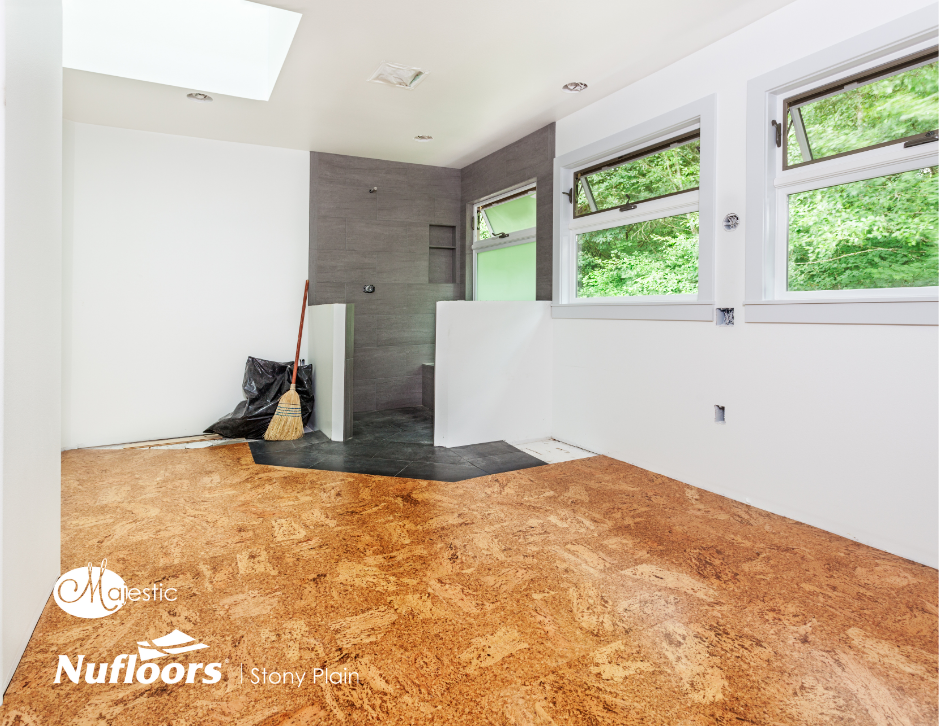
A kitchen floor needs to deal with wear and tear in a way that’s hard to gauge from a sample board. You stand on it while preparing dinner, walk across it without shoes and pull a chair over it at breakfast. Cork flooring brings a distinctive feel to those everyday moments, with a resilient surface and a natural pattern that belongs comfortably in a lived-in home.
Made from cork oak bark, the material has a cellular structure that contributes to several of its defining qualities. For homeowners in Stony Plain considering a kitchen, hobby room or quiet retreat, those characteristics make cork worth exploring.
Resilience and Comfort Underfoot
Cork contains countless small cells filled with gas. Their structure allows the material to compress under pressure and recover, giving it a degree of cushioning that distinguishes it from harder surfaces.
That resilience can be welcome in a room where you spend time standing. At a kitchen counter or a craft table, the floor becomes part of how comfortable the workspace feels. Cork remains firm enough to function as flooring, but its slight give is noticeable compared with ceramic tile or stone.
Resilience does not make cork immune to damage. Heavy furniture can leave indentations, and concentrated pressure from narrow legs needs appropriate protection. We recommend considering the weight and footprint of furniture alongside the flooring, particularly for rooms with substantial storage cabinets or equipment.
Thermal and Acoustic Insulation
Cork’s cellular structure also contributes to its insulating properties. It tends to feel warmer to the touch than other materials. During a Stony Plain winter, that difference can make a bedroom or reading room more inviting.
Its ability to absorb some sound is another useful quality. Footsteps and everyday movement can feel less pronounced than on a hard, reflective surface. Combined with upholstered furniture and curtains, cork can help soften the sound within a room.
Performance depends on the complete installation. The product’s thickness, backing and supporting layers all contribute to the result. If you need to reduce sound transmission between storeys, ask about tested ratings for the proposed floor assembly rather than relying on the surface material alone.
Natural Texture and Surface Protection
Cork’s appearance as a flooring material depends on the specific boards you choose - fine particles can produce a relatively consistent pattern, while larger pieces create bolder markings. Some products retain a recognisable cork appearance; others use decorative finishes to achieve a different look.
The protective finish is important to everyday care. It helps shield the surface, but maintenance instructions and moisture limitations vary by product. Spills should be addressed promptly, and cleaning products should follow the manufacturer’s recommendations. Sunlight can also affect appearance, making window exposure part of the selection.
At our flooring store in Stony Plain, we can help you compare cork flooring options with your room’s needs in mind. Bring details about furniture, sunlight and daily activities. Those practical considerations help match cork’s natural qualities to the places where you will appreciate them most.