

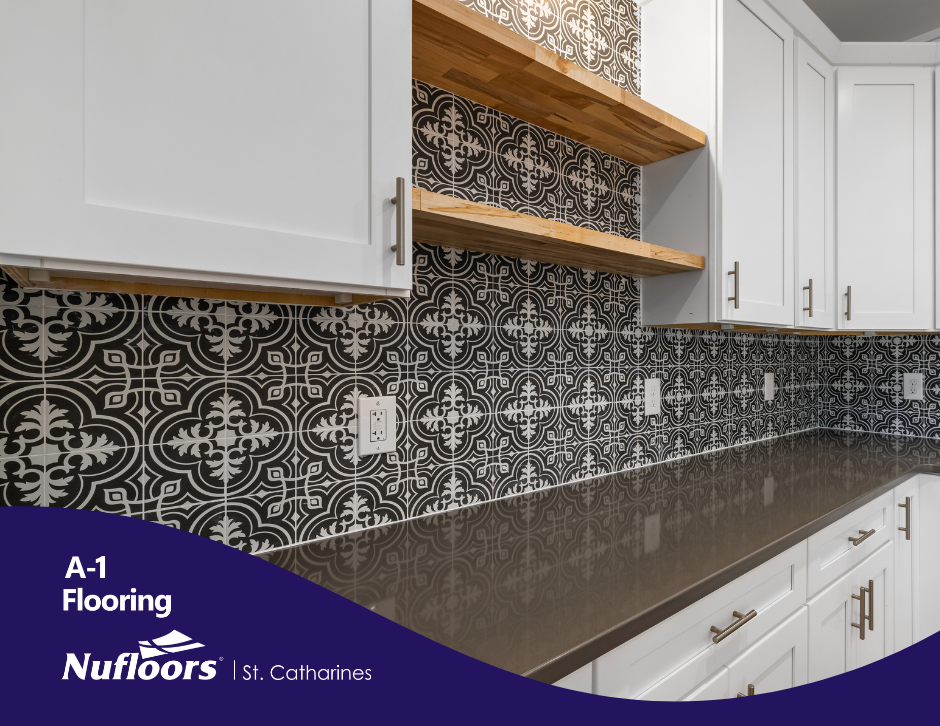
For centuries, Moroccan tile has brought colour, pattern and craftsmanship to homes, palaces and courtyards across North Africa. Today, these intricate designs have found a place in kitchens, bathrooms and entryways around the world, where they add warmth, texture and personality to contemporary interiors.
Whether used as a dramatic kitchen backsplash, a statement floor or an accent wall, Moroccan tile combines centuries-old artistry with timeless appeal. Visit your local Nufloors flooring store in St. Catharines to view tile samples and plan your design.
A Tradition Dating Back More Than 1,000 Years
Moroccan tilework traces its origins to the early Islamic dynasties of North Africa, where artisans developed intricate geometric designs inspired by mathematics, architecture and nature. Because Islamic art traditionally avoided depicting people and animals in religious settings, craftspeople instead created elaborate repeating patterns using stars, polygons and interlocking shapes.
These decorative mosaics, known as zellige, became a defining feature of Moroccan architecture, appearing in mosques, palaces, fountains and private courtyards throughout cities such as Fez, Marrakech and Meknes.
Many traditional workshops still produce zellige using techniques that have changed very little over hundreds of years.
What Makes Moroccan Tile Unique?
Unlike machine-made ceramic tile, traditional Moroccan zellige is handcrafted. Individual clay tiles are shaped, kiln-fired, glazed and then carefully cut by hand into smaller geometric pieces before being assembled into larger patterns. Because every piece is made individually, slight variations in colour, thickness and texture are expected.
Rather than being considered imperfections, these subtle differences are part of the material's charm. The uneven surfaces reflect natural light differently throughout the day, creating movement and depth that cannot be replicated by mass-produced tile.
Traditional Colours with Modern Appeal
Historic Moroccan interiors often featured rich cobalt blue, emerald green, terracotta, saffron yellow and crisp white. These colours reflected both the surrounding landscape and centuries of artistic tradition.
Today's designers have expanded the palette to include soft greys, warm creams, charcoal and muted earth tones that complement contemporary kitchens and bathrooms while preserving the distinctive Moroccan patterns.
Whether bold or understated, the repeating motifs create visual interest without relying on oversized graphics or short-lived trends.
Where Moroccan Tile Works Best
One of the reasons Moroccan tile has remained popular is its versatility. It makes an eye-catching backsplash behind a range or sink, creates a welcoming front entry and adds character to powder rooms and laundry rooms. Many homeowners also use Moroccan-inspired tile to define shower niches, fireplace surrounds or feature walls, introducing pattern without overwhelming the entire space.
For those who appreciate the look but prefer lower maintenance, many porcelain and ceramic tiles are now manufactured with Moroccan-inspired patterns, offering the same decorative effect in a highly durable format.
A Flooring & Accent Style That Stands the Test of Time
At Nufloors St. Catharines, we offer a wide selection of ceramic, porcelain and decorative tile inspired by timeless design traditions from around the world. Whether you're creating a statement backsplash, renovating a bathroom or adding character to an entryway, our team can help you select materials that combine lasting beauty with everyday performance.