

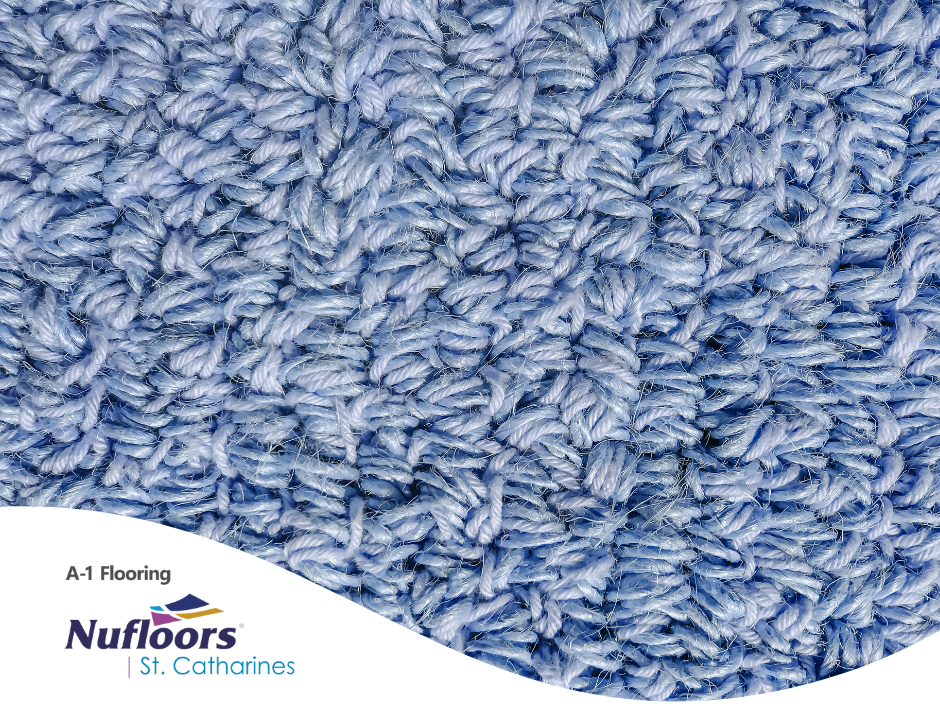
The surface of a carpet begins with how its yarn is formed. In loop pile carpet, the yarn returns to the backing in a series of uncut loops. Those loops create the finished texture, which can range from a fine, closely packed surface to a more pronounced, pebbled appearance. That construction gives loop carpet its distinctive look and feel.
Level Loop Carpeting
Level loop carpet uses repeating loops of approximately the same height. The result is an even surface with a regular texture, especially noticeable in styles with small, tightly formed loops.
A low, dense loop construction can work well in busy areas where a deep, plush pile would be less practical. Its relatively compact surface tends to show fewer footprints and shading marks than some cut pile styles, helping the room maintain a consistent appearance throughout the day.
The feel still varies between products. Larger loops can create a more substantial, visible texture, while finer ones produce a quieter, denser finish. We recommend comparing them by touch as well as appearance, particularly for a bedroom where barefoot comfort matters.
Multi-Level Loop Carpeting
Multi-level loop carpet combines different loop heights to create a pattern within the surface. Raised and lowered sections can form lines, geometric shapes or an irregular texture that can become a featured part of your interior design.
This gives the carpet a decorative role while keeping the overall effect restrained. In a simply furnished room, the pattern becomes more noticeable as light falls across it. Beneath a dining table or around a seating arrangement, it can introduce detail without competing with the furniture.
The pattern’s scale matters. A small sample may show the texture but only part of the design. Look at a larger display or room photograph to see how the repeat develops across the floor.
Loop Density, Fibres and Everyday Care
Loop construction alone does not determine the durability of a carpet. The fibre, density, backing and suitability for the intended traffic all contribute to performance. Two carpets with similar-looking loops may respond differently to repeated use.
Closely-packed loops can provide a firm surface, but height and density should be considered together. Ask about the product’s recommended applications rather than judging quality from thickness or face weight alone.
Uncut loops can also catch on pet claws or sharp objects. A snag should be addressed according to the manufacturer’s guidance; pulling a loose strand can worsen the damage. For households with pets, we would discuss their habits alongside the carpet options.
Vacuuming instructions deserve attention too. Some loop carpets require particular settings or restrictions on rotating brushes to protect the yarn. Follow the product’s care guidance from the outset.
Visit our flooring store in St. Catharines to compare loop pile carpet styles in person. Seeing the loop size, feeling the surface and understanding the fibre will tell you far more than a colour swatch alone.