

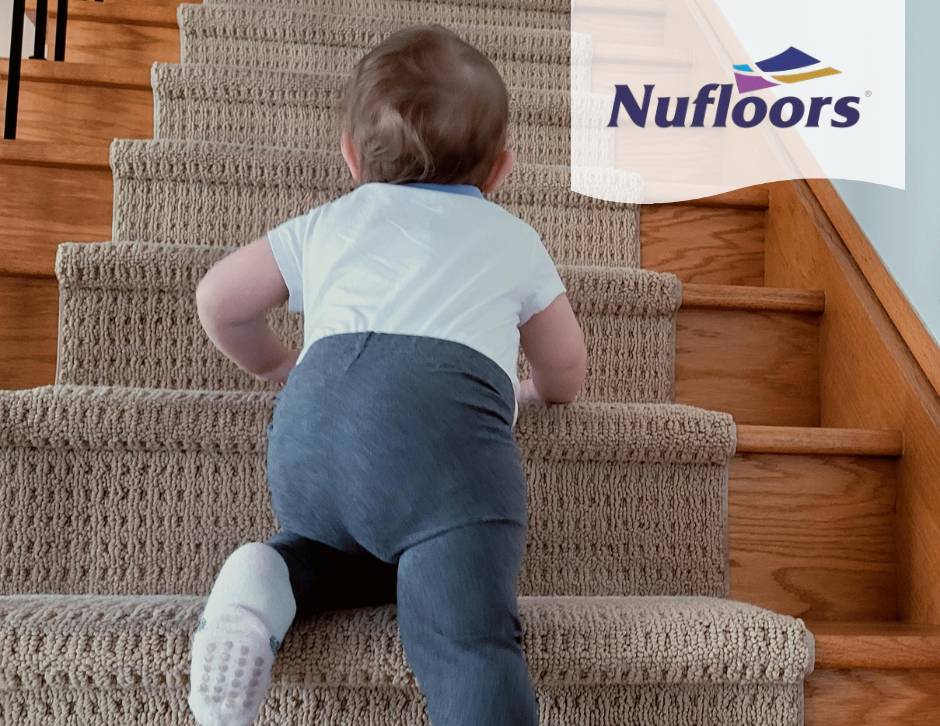
A staircase is often one of the first architectural features you see when entering a home. Its railings, treads and landings create a strong sequence of lines, sometimes extending through several floors. A carpet runner introduces softness along that route while leaving part of the staircase visible.
The result can feel traditional, relaxed or quite contemporary. Much depends on the runner’s proportions, texture, colour and how its edges are handled. We see stair runners as an opportunity to bring the same attention to detail to a staircase that you would give a well-furnished room.
Exposed Treads and Defined Edges
A runner leaves a strip of the stair tread visible on either side. That exposed surface frames the carpet and keeps the staircase’s construction part of the design.
Width deserves careful consideration. A narrow runner exposes more of the treads, creating a pronounced frame. A wider one gives carpet a greater presence and covers more of the walking surface. The right balance depends on the staircase’s dimensions, the position of the spindles and how people use the stairs.
Consistency is important, particularly when viewed from below. Even margins help the runner look deliberate as it travels upward. On stairs that widen, curve or include winders, achieving that effect requires a layout planned around the actual structure.
Bound Borders and Finished Details
The edge finish can be a distinctive feature in its own right. Binding creates a defined border, while serging wraps the edge with yarn for a different appearance. Available treatments depend on the carpet and the fabricator.
A broad binding can give a plain runner a tailored outline. A less prominent edge allows the carpet’s texture or pattern to remain the focus. Consider the border alongside the railing: an ornate balustrade may benefit from a quieter treatment, while simple spindles leave room for a stronger outline.
Corners and joins matter too. Ask how the edge treatment will continue at turns and where seams will fall. These details are easier to resolve before fabrication than after the carpet has been cut.
Landings and Continuous Patterns
A landing changes the runner’s direction and gives its design a larger surface to occupy. Stripes, checks and other repeated motifs need particular attention here, since a turn or join can interrupt their alignment.
One approach is to continue the runner across the landing. Another is to carpet the landing more fully, creating a transition between flights. The decision should account for doorways, furniture and the route through the space.
The carpet itself must be suitable for stair use, with installation and underlay selected for that application. Secure fitting is essential, especially around nosings and changes in direction.
Explore our flooring products, then bring photographs and dimensions of your staircase to your local Nufloors team. A runner planned around the whole route can make the stairs feel like a considered part of the home, from the first tread to the upper landing.