

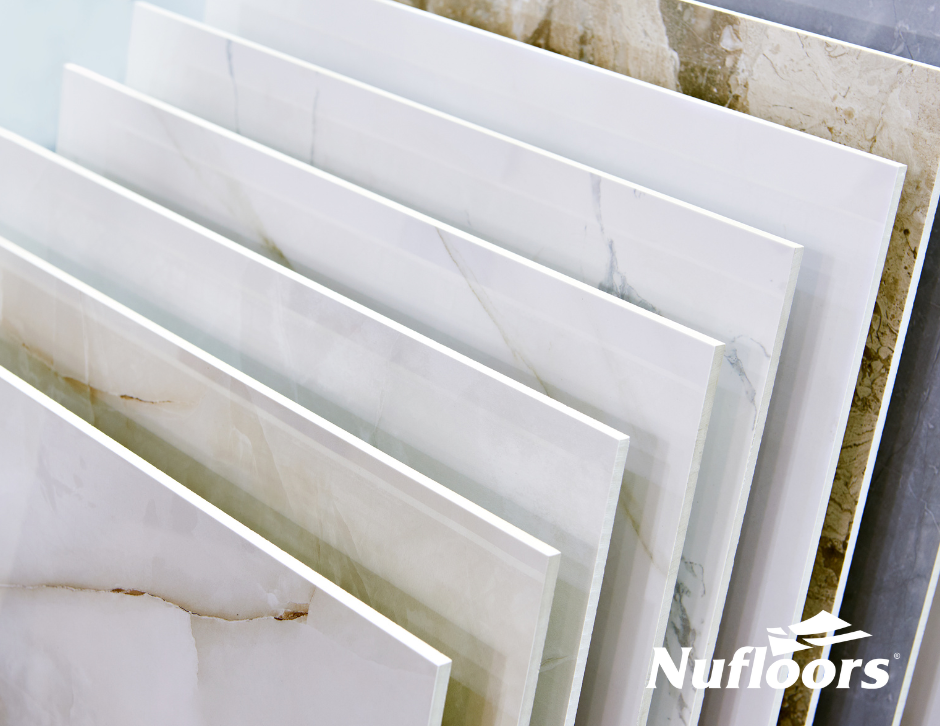
Limestone has an understated beauty. Its sandy colours, faint mineral markings and gentle variation feel at home beside oak cabinetry, plaster walls and woven fabrics. It gives a room character without demanding that every other finish compete with it.
Limestone-look porcelain tiles capture that classic softness in a manufactured material. For a kitchen, entryway or bathroom, they offer a way to introduce the appearance of stone without paying for it.
Find the Character in Porcelain Tiles
The most appealing limestone looks often reveal themselves gradually. From across the room, the floor may read as a consistent beige or soft grey. Up close, small flecks, cloudy patches and delicate markings give individual tiles their character.
Consider how much movement you want across the finished floor. A quieter design can complement a kitchen with strongly grained cabinetry. More pronounced variation may suit a pared-back entryway, where the floor has room to become a feature.
Colour names provide only a starting point. “Sand” might lean golden, while “ivory” could have a grey cast. Look at several tile faces together to understand the range within the design. A single sample cannot show how lighter and darker pieces will interact across a room.
Pair Stone Looks with Familiar Materials
In a kitchen, limestone-look tile and wood cabinetry make a particularly comfortable pairing. Pale oak beside warm beige creates a gentle transition between surfaces. Walnut or a deep brown cabinet finish introduces more contrast, giving the tile a lighter supporting role.
Painted cabinets open up other possibilities. Olive, muted blue and warm white can each work with a limestone palette, depending on the tile’s undertone. A simple countertop allows the floor’s finer markings to remain visible.
The same material can take on a different mood in an entryway. Add a timber bench, a substantial mirror and a wool runner, and the space feels welcoming with relatively few elements. In a bathroom, a limestone look can bring warmth beside white fixtures and brushed metal fittings.
We would choose grout as part of the palette rather than leaving it until the end. A close colour match creates a continuous impression, while a contrasting joint makes the tile layout more prominent. Neither is automatically better; the choice depends on whether you want the surface or its geometry to lead.
Choose the Surface for Its Setting
A limestone appearance does not tell you everything about a porcelain tile’s performance. Finish, floor suitability and care requirements belong to the individual product. For bathrooms and entrances exposed to moisture, confirm the tile’s suitability for those conditions, including slip resistance.
Think about cleaning, too. A more textured surface may collect dirt differently from a smoother one. Ask to see the recommended maintenance instructions before making your selection.
Explore our flooring products as you consider the materials for your home. With limestone-look porcelain, the appeal often rests in the smaller details: a gentle colour shift, a softly marked surface and a grout shade that lets them settle naturally into the room.