

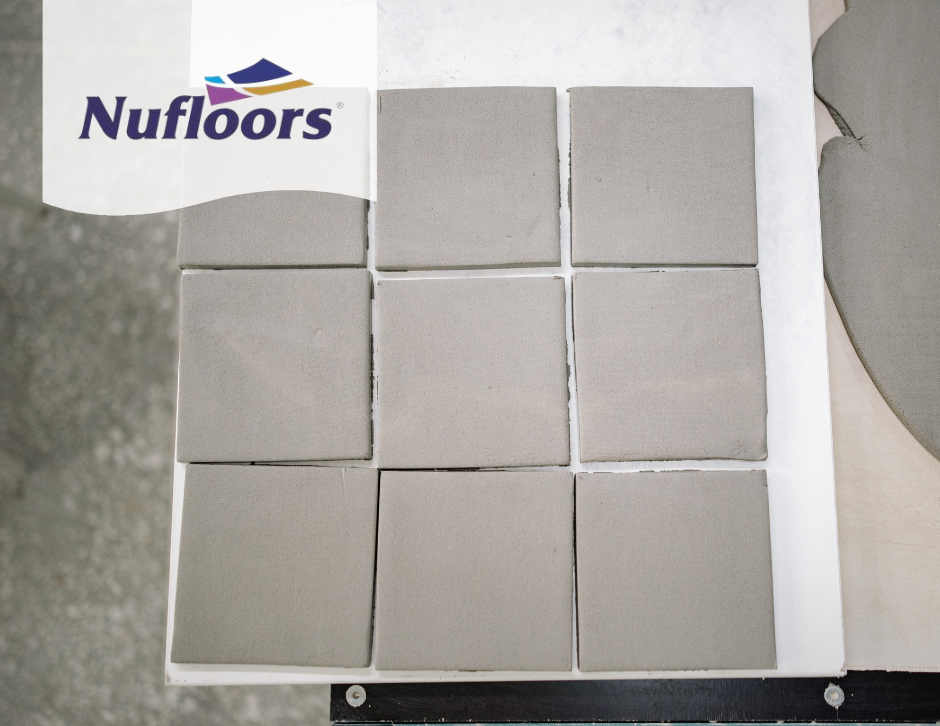
How do silica, clay and other minerals get forged into the neat, tidy tiles we use on our floors and backsplashes? It’s an interesting journey that starts with mineral mining and ends with the expertly-crafted colours, patterns and textures you see in our showroom.
Along the way, those raw ingredients are blended, shaped and fired in a kiln to create ceramic and porcelain tile. Here’s how each step helps turn them into a finished surface for your home.
Preparing the Clay and Minerals
Manufacturers begin with a recipe of clay, feldspar and silica. Clay helps the mixture hold its shape, silica contributes to its structure and feldspar helps the ingredients fuse during firing. The proportions vary depending on the tile being made.
In a common manufacturing process, these ingredients are mixed with water and ground in a mill to form a smooth slurry, a thick liquid called slip. The slip is sprayed into a chamber of hot air, which evaporates much of the water and leaves small granules with controlled moisture content. These granules are then ready to be compressed into tile shapes.
Porcelain uses a carefully controlled formulation and firing process to produce a dense ceramic body with very few open pores. To qualify as porcelain, the finished tile must absorb no more than 0.5% of its weight in water under the standard test.
Pressing and Drying the Tile
Many tiles are shaped using powerful presses that compress the prepared material into moulds. The mould establishes the basic dimensions and can introduce surface texture. Other manufacturing systems form large porcelain panels using continuous compaction.
At this stage, the shaped tile has not developed its finished strength. It must be handled carefully and dried under controlled conditions to remove moisture before further processing.
Drying helps prepare the pieces for firing and reduces the risk of defects caused by moisture escaping too quickly in the kiln.
Applying Glaze, Colour and Pattern
For glazed tile, manufacturers apply a surface coating that contributes colour and finish. Digital printing adds details such as marble veining, wood grain or concrete shading.
A collection can include multiple printed designs, allowing an installed floor to have variation rather than repeating one identical image. Texture and deliberately varied edges can also give manufactured tiles a more rustic appearance.
Some tiles are unglazed. With glazed products, the surface design does not necessarily extend through the full thickness, which is worth considering when planning exposed edges.
Firing and Finishing
Tiles travel through a kiln, where carefully controlled heat transforms the prepared body into a hard material. Depending on the production method, glazing and firing may happen in one cycle or separate stages.
After cooling, some tiles are polished. Others are rectified, meaning their edges are mechanically finished for more precise sizing. Rectified tiles still require appropriate grout joints.
Finished pieces are inspected and sorted before packaging. Manufacturers check characteristics such as dimensions, surface appearance and defects.
Choosing Tile with Nufloors
At Nufloors, we help you compare each flooring product by its intended use, finish and care requirements, so your selection works as well as it looks. Come by the store and take a look at our samples and catalogues!