

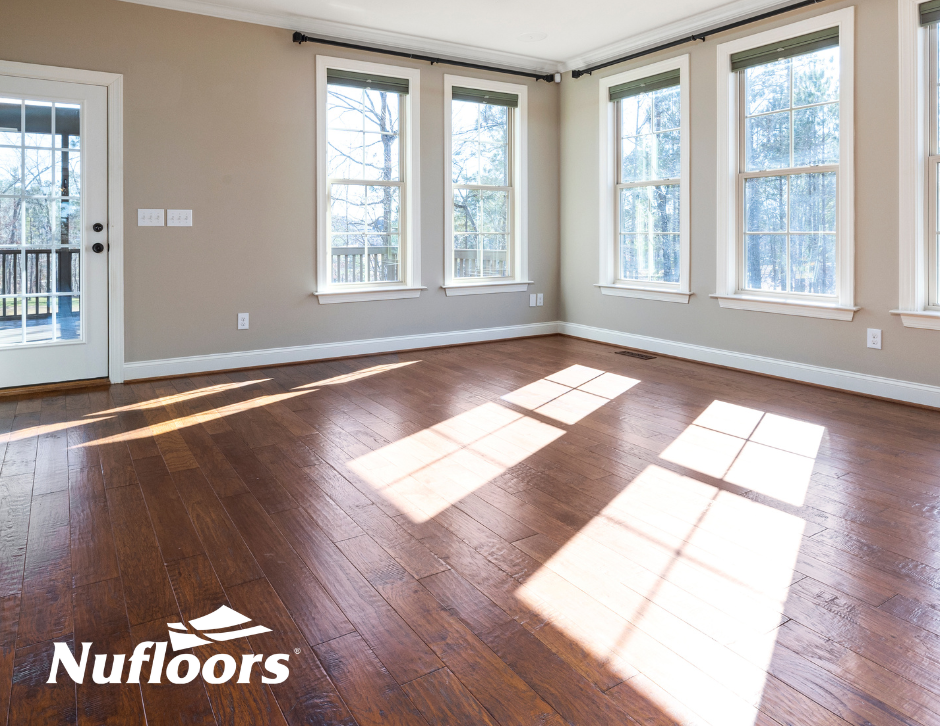
One of the reasons hardwood flooring has remained popular for generations is its natural beauty and longevity. Unlike many manufactured flooring products, however, hardwood is a living material that continues to respond to changes in its environment long after it has been installed.
Seasonal fluctuations in humidity can cause wood to expand and contract throughout the year. Understanding how this movement occurs can help homeowners protect their investment and recognize when changes are normal versus when they require professional attention.
Visit our local Nufloors flooring store for more information on types of hardwood flooring and installation support.
Why Wood Expands and Contracts
Wood naturally absorbs and releases moisture from the surrounding air until it reaches an equilibrium with the indoor environment. During humid months, hardwood absorbs moisture and expands slightly. When indoor air becomes dry during the winter heating season, the wood releases moisture and contracts.
This movement is expected and is factored into professional installation. Small seasonal gaps between boards during the winter and their gradual closing in the summer are generally considered normal for solid hardwood flooring.
Problems arise when humidity levels change rapidly or remain consistently outside the recommended range.
Too Much Moisture Can Damage Hardwood
Excessive humidity may cause hardwood boards to swell beyond their normal limits. As neighbouring boards press against one another, the floor can develop cupping, where the edges rise higher than the centre of each board.
If excess moisture is trapped beneath the flooring or the surface dries too quickly after becoming saturated, the opposite condition, known as crowning, may occur, leaving the centre of the boards higher than the edges.
These issues often indicate that a moisture problem should be investigated rather than simply refinishing the floor.
Stable Humidity Helps Floors Last Longer
Maintaining a consistent indoor humidity level is one of the best ways to protect hardwood flooring. Using a humidifier during Canada's dry winter months and controlling excess humidity during the summer can reduce seasonal movement and help preserve the floor's appearance.
Professional installation also plays an important role. Hardwood should be allowed to acclimate to the home's indoor conditions before installation, giving the wood time to adjust before it is fastened in place. Proper subfloor preparation and moisture testing are equally important to long-term performance.
Engineered hardwood may also be worth considering in areas where humidity fluctuations are more significant, as its layered construction provides greater dimensional stability than solid hardwood.
Protect Your Hardwood Flooring
Hardwood flooring is designed to last for decades, but it performs best when installed correctly and maintained in a stable indoor environment. Understanding how humidity affects natural wood helps homeowners avoid unnecessary damage while appreciating the normal seasonal changes that occur throughout the year.
At Nufloors, we'll help you choose the right hardwood flooring for your home and provide professional installation designed to maximize its long-term performance. Whether you're considering solid or engineered hardwood, our team can recommend flooring that's suited to your lifestyle and your local climate.